

How is chocolate made?
Roast • Winnow • Grind • Age • Temper • Wrap • Share
We source raw cacao beans from small farmer producers around the world. In our Exeter factory we turn these heirloom quality cacao seeds into fine chocolate bars. The making of chocolate is laborious: each step requires careful sensory awareness, technical acuity and consistency, and always a commitment to the pursuit of the finest flavor possible.
Once we receive the cacao, it is up to Enna, the chocolate maker, to unlock this potential by roasting the beans. When we receive our fermented & dried cacao beans Enna will run a series of roasting tests to determine the best roast profile. Every origin that we work with is roasted differently, in order to draw out the flavores that Enna finds most interesting. Too much heat/time, and the finished chocolate may taste flat and bland or - even worse - burnt. Too light and it may maintain unfavorable vegetable or acidic notes.
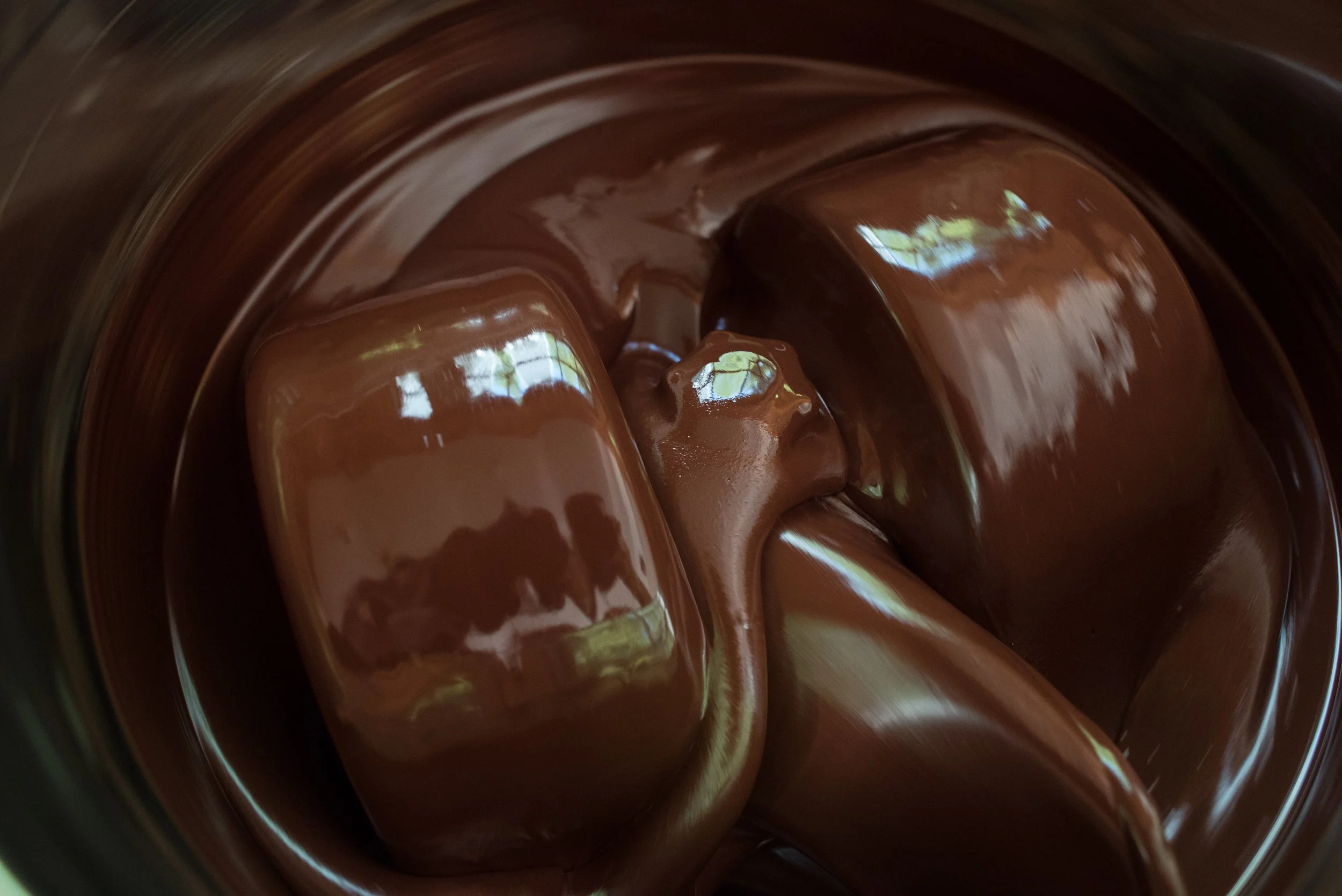
Following the roast, the cacao is cracked and winnowed to remove the husk, then processed in melangers that grind the cacao into smooth chocolate over several days. We taste the chocolate frequently through this phase. While it’s in the melanger, the particle size will be refined until the texture is smooth, certain aromatic elements are oxidizing and evaporating, the sugar is incorporated, and the cocoa butter is coaxed into encapsulating every cocoa and sugar particle with velvety smoothness.
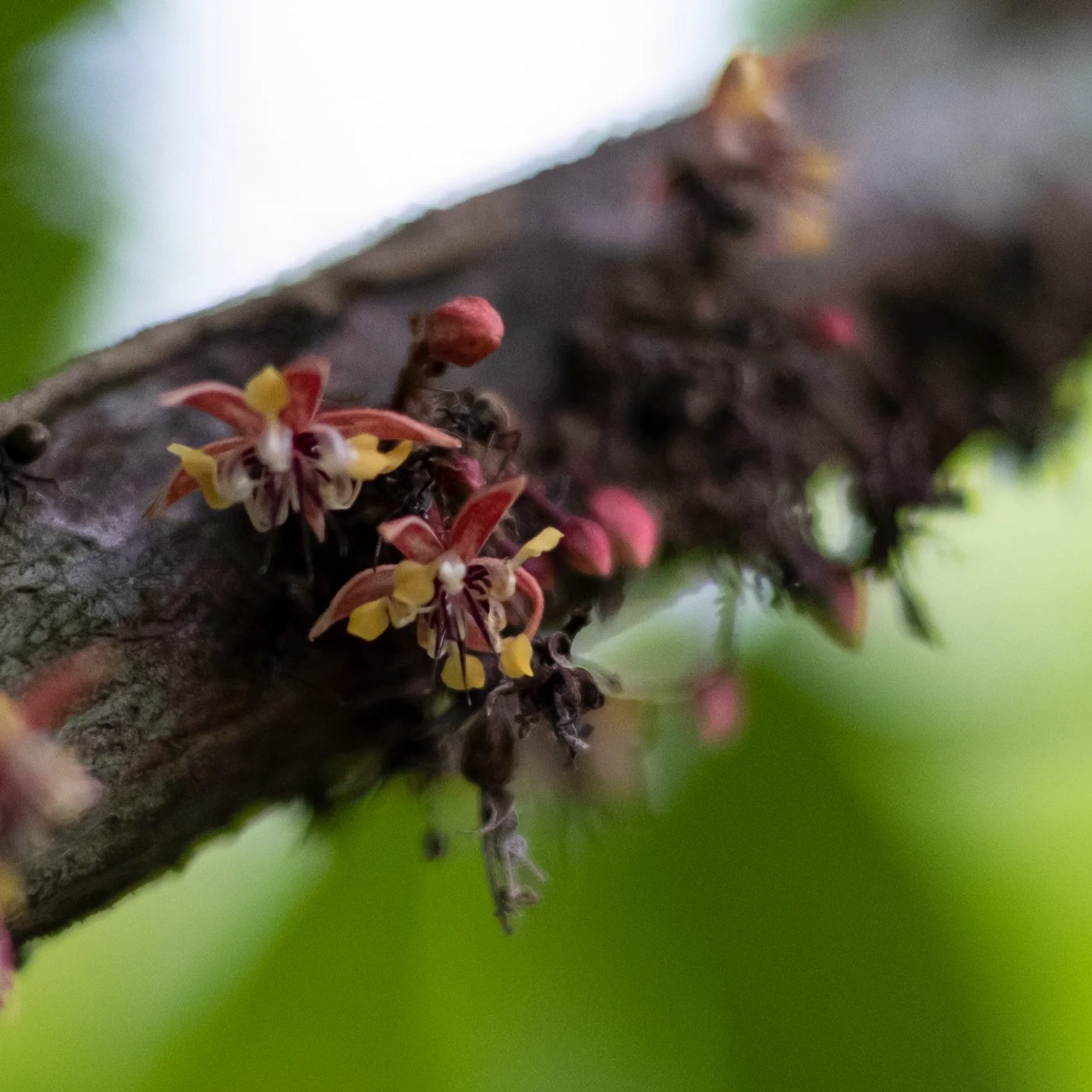
Theobroma Cacao
The cacao tree originated in the Amazon basin, an area of incredible biodiversity. Over tens of thousands of years the seeds were spread throughout most of Central America, and also south of the Amazon, by people and animals.
The fruit that encapsulates the seeds is delicious, so it's no surprise that this plant is beloved by humans and animals alike. The Mayans and the Olmec before them developed sophisticated cultivation techniques for cacao trees. Prior to European contact and colonization of the Americas and other regions of the world, cacao was a high value commodity.
Terroir and genetics are the foundation of flavor in single origin bean to bar chocolate. Each of our cacao origins has a distinct flavor profile: chocolate can have fruity, earthy, herbal, nutty, and more flavor notes, all due to genetic origin, where it is grown, and how the beans are fermented and processed. This is the foundation from which we explore roast and processing the cacao into finished chocolate.
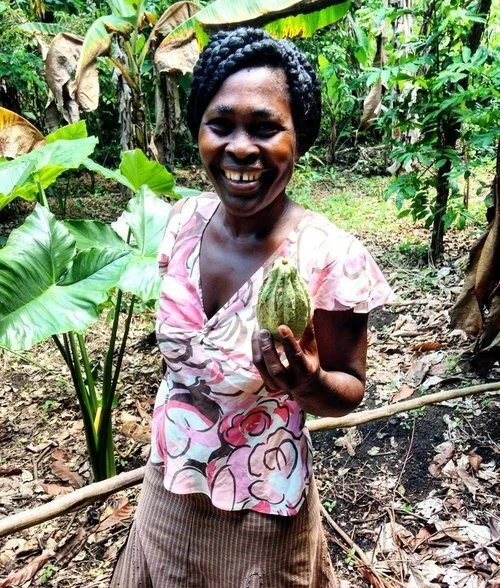
The cacao farmers and producers we work with
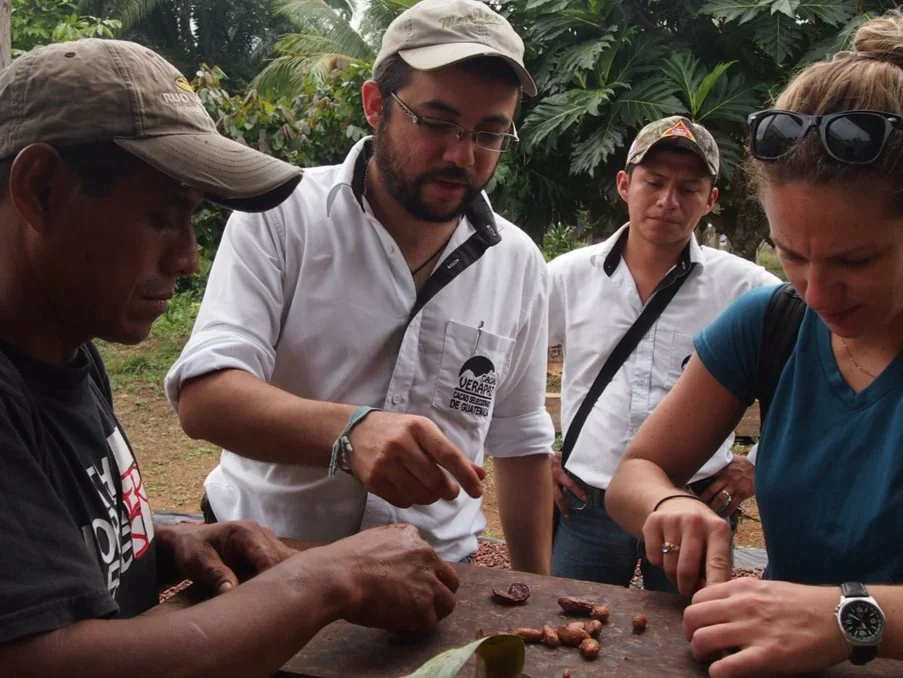
The cocoa pods are harvested from the trees with machetes. Depending on the farmers' relationship with the fermentary, they will deliver either the whole pods or just the fruit and seeds (baba) from inside the pods to a centralized fermentary.
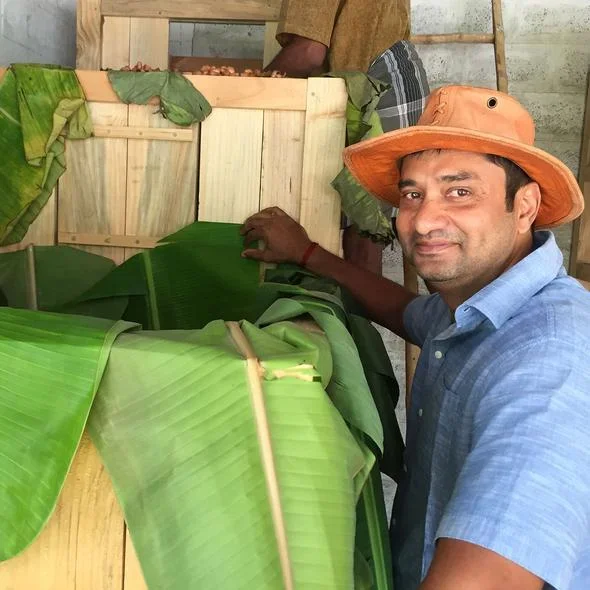
Cacao beans are fermented upon harvesting from the trees: this crucial step establishes the primary flavor potential of the chocolate. This process takes about one week, and leads to complex flavor and aroma.
Our sourcing partners
Our sourcing partners provide support directly to our farmer partners in numerous ways: they help in the form of micro-loans, agricultural consultants and assistance with maintaining organic and other certifications. They also manage the complex logistics of transport, agricultural inspections, safe warehousing, and delivery to me. As much as I would love to travel around the world to procure my cacao and meet my farmer partners, I cannot provide the resources that my sourcing partners provide to these farming families and their communities.
The cacao buying agent is part of what makes our bean-to-bar project viable and sustainable for both farmers and for we the small chocolate makers. When people ask "do you buy direct?" I think what they mean is "how do you ensure that you are supporting the farmer producers in a sustainable and fair way?" and "is your cacao entirely traceable?" Our sourcing partners ARE how we maintain the most fair, sustainable, and traceable exchange of our cacao. They facilitate direct relationships between us and our cacao farmer partners.
Where does cacao grow?
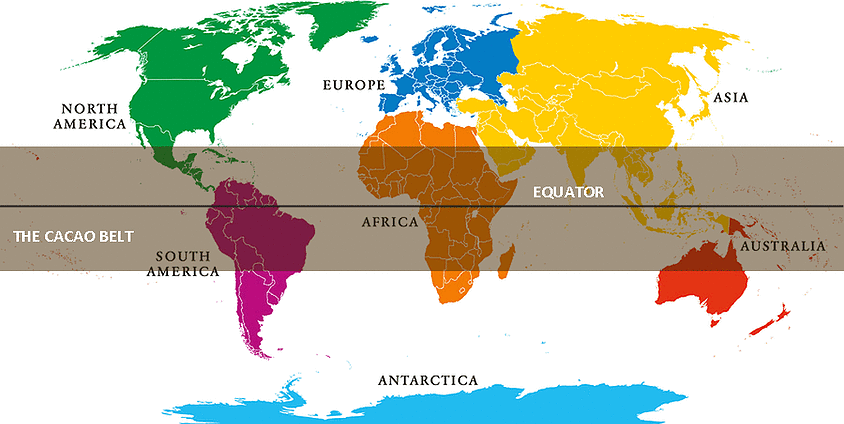
The regions of the world where cacao is grown are in what we often refer to as the 'cocoa belt', a zone within 20 degrees of the equator around the world. No matter where it is grown, virtually all of the chocolate that we eat all is connected in some way to the legacy of slavery and colonialism.
We strive to educate ourselves and our customers about this legacy. We produce our chocolate with cacao that is entirely traceable in order to ensure that it is everything that we hope for (and more) when we consider the benefits